
Varicocele Treatment Kansas CityMinimally Invasive Varicocele Treatments
What is Varicocele?
A varicocele is an enlargement of the veins within the scrotum, similar to varicose veins in the legs. These veins, called the pampiniform plexus, become swollen due to improper blood flow, often caused by faulty valves in the veins. Varicoceles can lead to discomfort, testicular pain, and in some cases, issues with fertility.
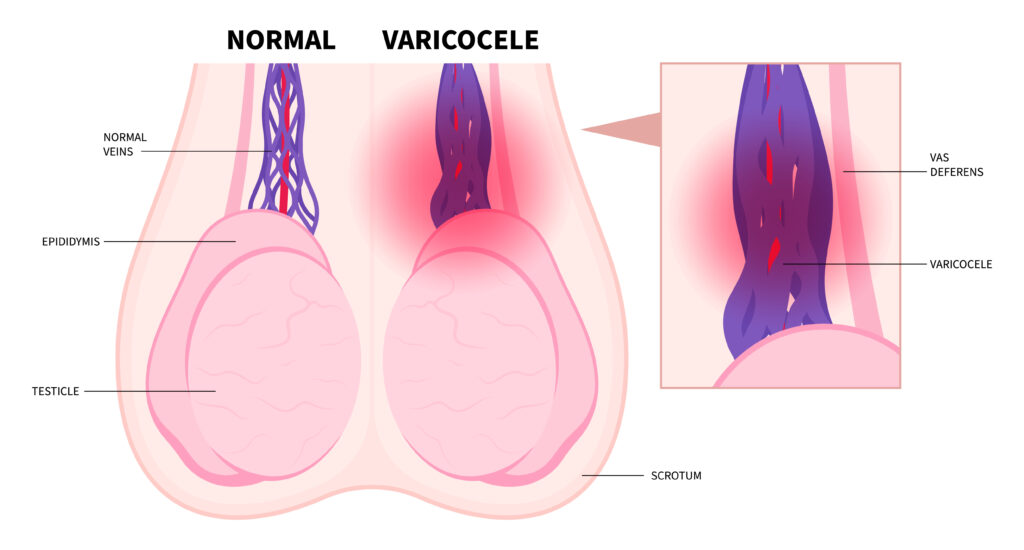
What Are the Symptoms of Varicocele?
Varicoceles don’t always cause noticeable symptoms, but when they do, patients may experience:
- A dull ache or heaviness in the scrotum.
- Visible enlarged veins in the scrotum.
- Swelling or asymmetry in the testicles.
- Discomfort or pain that worsens with prolonged standing or physical activity.
- Fertility problems, such as difficulty conceiving.
Risk Factors of Varicocele
Age
Varicoceles are most common in adolescents and young adults.
Obesity
Excess weight may increase vein pressure.
Anatomy
Certain anatomical variations in vein structure can increase the risk.
Sedentary lifestyle
Prolonged sitting or standing can affect blood flow.
What is Varicocele Embolization?
Varicocele embolization is a minimally invasive procedure designed to treat varicoceles by blocking abnormal blood flow in the affected veins. This procedure relieves pain, improves testicular function, and may enhance fertility without the need for open surgery.
How is Varicocele Embolization Performed?
1
Imaging Guidance: X-ray dye is used to visualize the varicocele and confirm abnormal blood flow.
2
Catheter Placement: A thin catheter is inserted into a vein in the groin or neck.
3
Embolization: Tiny coils or plugs are placed inside the affected veins to block excessive blood flow.
4
Closure: The catheter is removed, and a small bandage is applied to the access site.
Why Choose Varicocele Embolization?
Minimally Invasive
No incisions or stitches required.
Quick recovery
Most patients resume normal activities within 24–48 hours.
Effective Symptom relief
Reduces pain, swelling, and discomfort.
Imrpoved Fertility
Helps restore normal testicular function in men experiencing infertility.
Conservative Treatments for Varicocele
Not all varicoceles require treatment. Mild cases can often be managed with lifestyle adjustments, such as:
Underwear
Wearing supportive underwear to reduce discomfort
Avoiding prolonged standing
Avoiding prolonged standing or heavy lifting.
Healthy Weight
Maintaining a healthy weight to reduce vein pressure.
Exercise
Regular exercise to improve overall circulation.
Frequently Asked Questions About Varicocele Embolization
Is the procedure painful?
No, the procedure is performed under local anesthesia with sedation, and most patients report minimal discomfort.
How long does the procedure take?
The procedure typically takes 1–2 hours, depending on the complexity of the condition.
When will I notice symptom relief?
Most patients experience symptom relief within days to weeks after the procedure.
Are there risks involved?
Risks are minimal and may include minor bleeding, infection, or recurrence of the varicocele.
Can the varicocele return after treatment?
While recurrence is rare, it’s possible, especially in severe cases. Follow-up care is essential.
Is the procedure covered by insurance?
Many insurance plans cover venogram with intervention if deemed medically necessary.
Take the First Step Toward Pain Relief
At Vascular & Interventional Specialists of Kansas City, we are committed to providing innovative, minimally invasive treatments to help you live pain-free.
Contact us today or call (816) 720-5332 to schedule your consultation and take control of your vascular health.
If you experience emergency symptoms, such as severe pain or swelling, call 911 immediately.