
Adenomyosis & Uterine Fibroid Treatment Minimally invasive treatment for uterine fibroids
What are Uterine Fibroids?
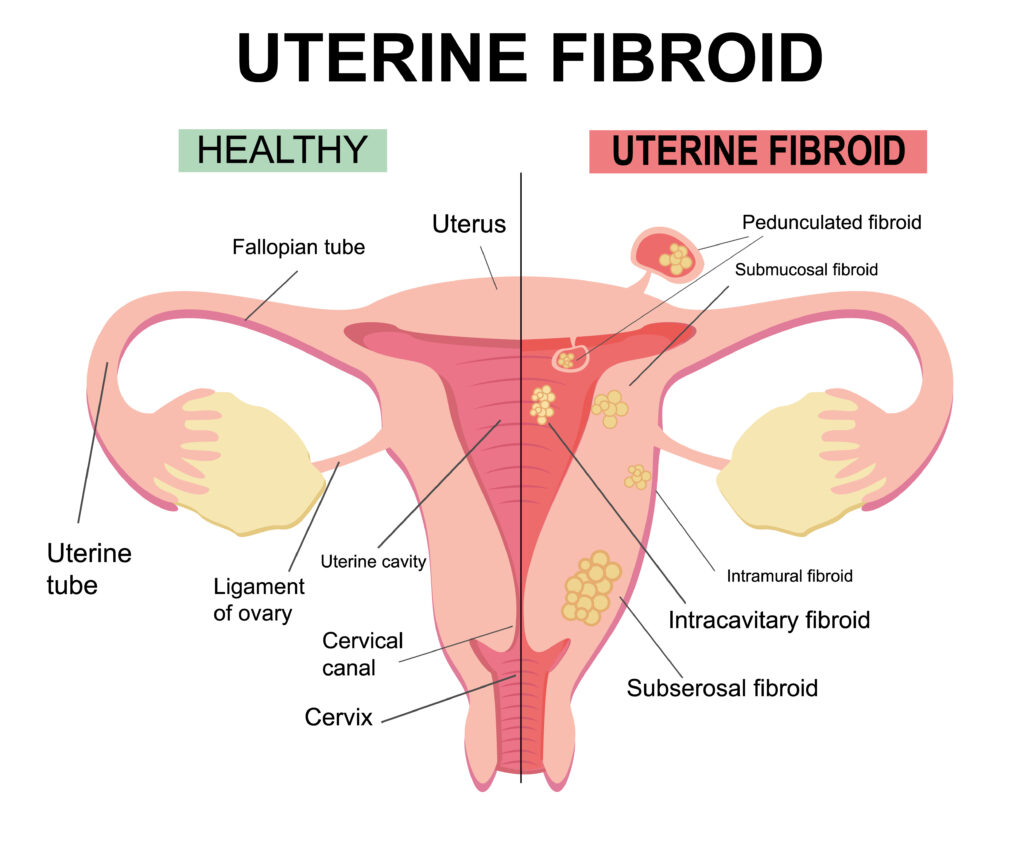
Uterine fibroids are benign growths that form in the uterus, composed of smooth muscle and connective tissue. These fibroids vary greatly in size, ranging from microscopic to large masses that can distort or enlarge the uterus.
As many as 20–80% of women develop fibroids by age 50, but many are asymptomatic and don’t require treatment. It is very rare for uterine fibroids to become malignant.
What is Adenomyosis?
Adenomyosis is a condition where the uterine lining grows into the muscle of the uterus, causing it to enlarge. This can lead to heavy periods, cramping, and pelvic pain. It is most common in women over 30 and those who have had children, but treatment can help manage symptoms.
What Are the Symptoms of Uterine Fibroids?
While many women with uterine fibroids experience no symptoms, those who do may notice:
- Heavy or painful periods
- Bleeding between periods
- Pelvic pressure or pain
- Bloating or a feeling of fullness in the lower abdomen
- Frequent urination or difficulty emptying the bladder
- Constipation or rectal pain
- Pain during sex
- Lower back pain
- Reproductive problems, such as infertility or multiple miscarriages
Symptoms often depend on the size, number, and location of the fibroids.
Risk Factors of Uterine Fibroids
race
Black women are more likely to develop fibroids than women of other racial groups.
Obesity
Higher body weight is associated with a greater risk of fibroids.
family history
A family history of fibroids increases the likelihood of developing them.
Early onset Menstruation
Starting menstruation at an early age may increase risk.
What is Uterine Fibroid Embolization (UFE)?
Uterine Fibroid Embolization (UFE) is a minimally invasive procedure performed by board-certified interventional radiologists to treat uterine fibroids.
How is ufe Performed?
1
Artery Access: A small needle is used to access an artery in the wrist or groin
2
Imaging Guidance: X-ray dye is injected to visualize the blood vessels feeding the fibroids.
3
Embolization: Microscopic particles are injected to block blood flow to the fibroids.
4
Closure: The catheter is removed, and a bandage is applied to the access site.
Why Choose UFE?
Minimally Invasive
No incisions or stitches required.
Quick recovery
Most patients return to normal activities within a few days.
Effective relief
Shrinks fibroids and alleviates symptoms.
Preserves fertility
UFE avoids hysterectomy, preserving the uterus.
Prevention Treatments for Uterine Fibroids
While there is no definitive way to prevent uterine fibroids, adopting a healthy lifestyle may help reduce the risk:
Maintain a healthy weight
Maintain a healthy weight to reduce hormonal imbalances.
Eat a balanced diet
While there is no definitive way to prevent uterine fibroids, adopting a healthy lifestyle may help reduce the risk:
Limit alcohol consumption
Limit alcohol consumption to support hormonal balance.
Stay active
Stay active with regular physical exercise to improve overall health.
Frequently Asked Questions about Uterine Fibroid Embolization
Is UFE painful?
The procedure is performed under local anesthesia with sedation, and most patients report minimal discomfort.
How long does UFE take?
The procedure typically lasts 1–2 hours, depending on the size and number of fibroids.
How soon can I return to normal activities?
Most patients resume normal activities within 1–2 days and full recovery within a week.
Are there risks with UFE?
Risks are minimal but may include minor bleeding, infection, or temporary pelvic discomfort.
Will UFE affect my fertility?
UFE preserves the uterus and may maintain fertility for some women, but it’s important to discuss reproductive goals with your doctor.
How effective is UFE?
Most patients experience significant symptom relief, and fibroids continue to shrink over time.
Take the First Step Toward Pain Relief
At Vascular & Interventional Specialists of Kansas City, we are committed to providing innovative, minimally invasive treatments to help you live pain-free.
Contact us today or call 816-720-5332 to schedule your consultation and take control of your vascular health.
If you experience emergency symptoms, such as severe pelvic pain or heavy bleeding, call 911 immediately.