
Achilles Tendinopathy Treatment Kansas CityMinimally Invasive Achilles Tendinopathy Care
What is Achilles Tendinopathy
Achilles tendinopathy occurs when the Achilles tendon, which connects the calf muscles to the heel bone, becomes damaged and inflamed due to overuse or stress. This condition can cause pain, stiffness, and difficulty with movement. If left untreated, Achilles tendinopathy may lead to partial or complete tears of the tendon, significantly impacting mobility and quality of life.
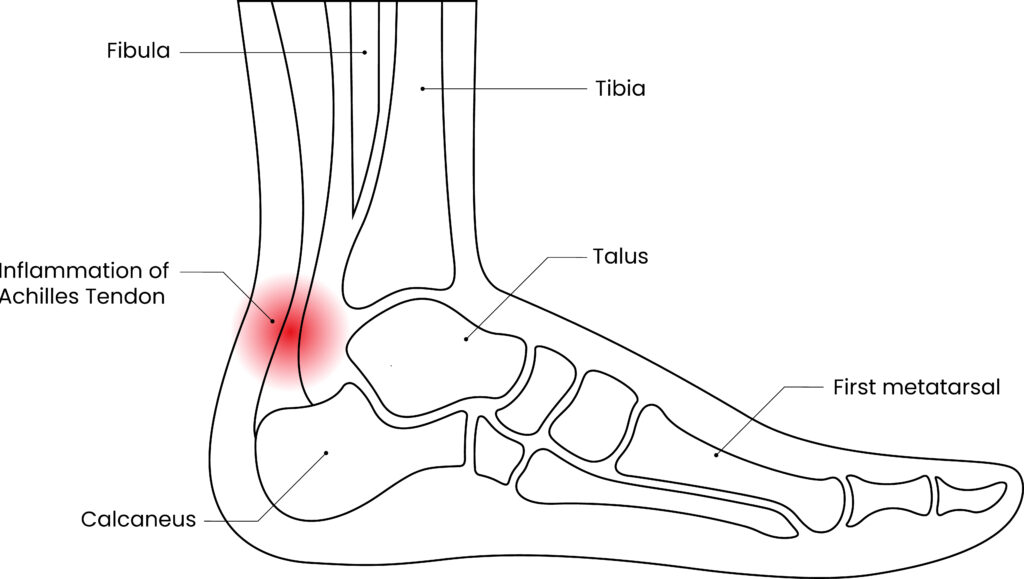
What Are the Symptoms of Achilles Tendinopathy?
Common symptoms include:
- Pain and stiffness in the back of the ankle, especially during or after activity.
- Swelling and tenderness along the tendon.
Thickening of the tendon over time. - Reduced strength and difficulty pushing off when walking or running.
- A popping or snapping sound in severe cases, which may indicate a tear.
Risk Factors of Achilles Tendinopathy Embolization (ATE)?
Age
Age over 30: Tendons lose flexibility with age.
Obesity
Extra weight puts added stress on the Achilles tendon.
Training on hard surfaces
Increases the risk of overuse injuries.
Improper footwear
Shoes lacking support increase strain on the tendon.
What is Achilles Tendinopathy Embolization (ATE)?
Achilles Tendinopathy Embolization (ATE) is a minimally invasive procedure designed to reduce inflammation and relieve pain caused by Achilles tendinopathy.
How is ATE Performed?
1
Artery Access: An artery in the upper thigh is accessed using ultrasound guidance, and a small tube is inserted.
2
Angiogram Imaging: X-ray dye is injected to map the blood vessels to the Achilles tendon.
3
Targeted Embolization: Microscopic particles are used to block inflamed blood vessels, reducing pain and inflammation.
4
Closure: The instruments are removed, and a pressure dressing is applied.
Why Choose ATE?
Minimally Invasive
No large incisions, ensuring faster recovery.
Safe and effective
Provides long-lasting relief for approximately 85% of patients.
Fast recovery
Patients can return to normal activity within a week.
Outpatient procedure
Completed in a single day with minimal downtime.
Conservative Treatments for Achilles Tendinopathy
Before considering ATE, patients may benefit from these non-invasive treatments:
Physical Therapy
Strengthening and stretching exercises over 12 weeks can improve tendon function.
RICE Protocol
Rest, Ice, Compression, and Elevation help manage acute symptoms.
Medications
NSAIDs can reduce pain and inflammation but should not be used long-term.
Bracing or Orthotics
Shoe inserts or braces can alleviate strain on the tendon.
Frequently Asked Questions about Achilles Tendinopathy
Is Achilles Tendinopathy Embolization painful?
The procedure is performed under IV sedation, with only mild discomfort during the injection of dye or medicine.
How long does the procedure take?
ATE typically takes 1–2 hours, depending on the severity of the inflammation.
How soon can I resume normal activities?
Light activities, such as walking, can usually be resumed immediately, with a full return to normal activities after one week.
Are there risks involved?
The risks are minimal and include minor bleeding, infection, or a temporary rash that resolves within two weeks.
How long does pain relief last?
Most patients experience long-lasting relief, and pain typically subsides within a few days to weeks.
Can the procedure be repeated?
Yes, if symptoms return, ATE or another treatment can be considered.
Take the First Step Toward Pain Relief
At Vascular & Interventional Specialists of Kansas City, we are committed to providing innovative, minimally invasive treatments to help you live pain-free.
Contact us today or call 816-720-5332 to schedule your consultation. Let us help you take the next step toward recovery.
If you experience emergency symptoms, such as severe pain or difficulty walking, call 911 immediately.