
Dialysis Access ManagementVascular & Interventional Specialists of Kansas City
Everything You Need to Know about Dialysis Treatment
Dialysis helps filter waste and excess fluids from a patient’s bloodstream when their kidneys stop working as well as they once did. During dialysis treatment, blood is drawn from the body, cleaned by a dialysis machine, and returned to the body to help maintain proper fluid and electrolyte balance.
Our Proven Approach to Dialysis Access Management
At Vascular and Interventional Specialists of Kansas City, we specialize in maintaining dialysis access to ensure safe and reliable blood flow during treatment.
AVF Placement – Surgical
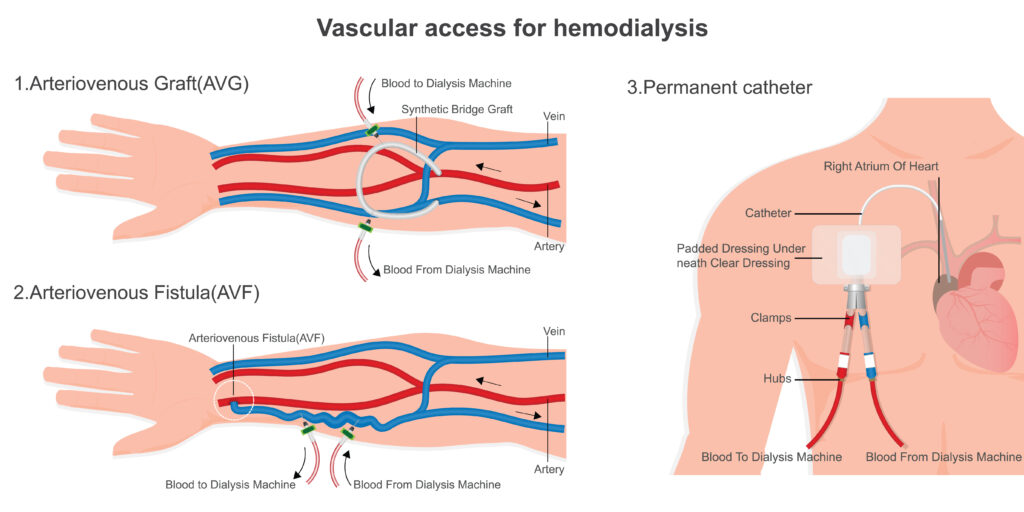
A surgical arteriovenous fistula (AVF) is created by connecting an artery to a vein, forming a durable, long-term dialysis access with strong blood flow.
AVF Placement – Minimally Invasive
Using advanced endovascular techniques, a fistula can be created without open surgery, reducing recovery time and discomfort.
Fistulagram
A fistulagram is an imaging procedure that evaluates dialysis access for blockages or narrowing. If issues are detected, treatments like angioplasty or stenting can restore proper function.
Central Catheter Placement
For immediate dialysis needs, a central venous catheter is placed in a large vein, allowing temporary access while a more permanent solution is prepared.
PD Catheter Placement
A peritoneal dialysis (PD) catheter is surgically placed in the abdomen, providing a reliable option for at-home dialysis treatments.
Dialysis Maintenance The Key to Safe and Effective Treatment
Dialysis access maintenance ensures the entry point remains safe, effective, and free from complications as it undergoes regular use—helping you stay on track with your treatments and overall health.
Ensure Efficient Treatment
Without a working access point, dialysis cannot be performed, making it difficult to remove waste and excess fluid from the body.
Reduce Complications and Risk
Proper access management helps minimize the risk of infection, clotting, and other complications that may interrupt treatment.
Support Long-Term Health
Well-kept dialysis access, especially with an AV fistula, can extend the ability to receive regular, ongoing treatments—improving your quality of life over time.
Exceptional Vascular Care Close to Home
At Vascular and Interventional Specialists of Chicago, we’re dedicated to providing exceptional dialysis access and maintenance to ensure you can continue your treatments.
The Comfort of Outpatient Care
You can trust us to provide top-tier service and support, all in a place where you can feel most comfortable.
Compassion from a Staff that Cares
Our friendly staff of professionals are dedicated to getting you the personalized care you want and need—from the first visit to every visit after.
Professionals You Can Count On
At Vascular and Interventional Specialists of Chicago, experience meets excellence. We pride ourselves on our knowledge and trust.
Frequently Asked Questions About Dialysis Access Management
What is the best type of dialysis access?
An arteriovenous fistula (AVF) is the preferred long-term option due to its durability and lower infection risk.
How long does it take for an AVF to mature?
An AVF typically takes 6–12 weeks to develop before it can be used for dialysis.
What happens if my dialysis access gets blocked?
A fistulagram can diagnose blockages, and treatments like angioplasty or stenting can restore proper blood flow.
Can I switch from hemodialysis to peritoneal dialysis?
Yes, if medically appropriate, a PD catheter can be placed to transition to at-home peritoneal dialysis.
How do I care for my dialysis access?
Keep the area clean, avoid heavy lifting, and monitor for any signs of infection or reduced blood flow.
Take the First Step Toward Pain Relief
At Vascular & Interventional Specialists of Kansas City, we are committed to providing innovative, minimally invasive treatments to help you live pain-free.
Contact us today or call (816) 720-5332 to schedule your consultation and take control of your vascular health.