
Frozen Shoulder Pain Relief Kansas CityMinimally Invasive Adhesive Capsulitis Embolization (ACE)
What is Adhesive Capsulitis (Frozen Shoulder)
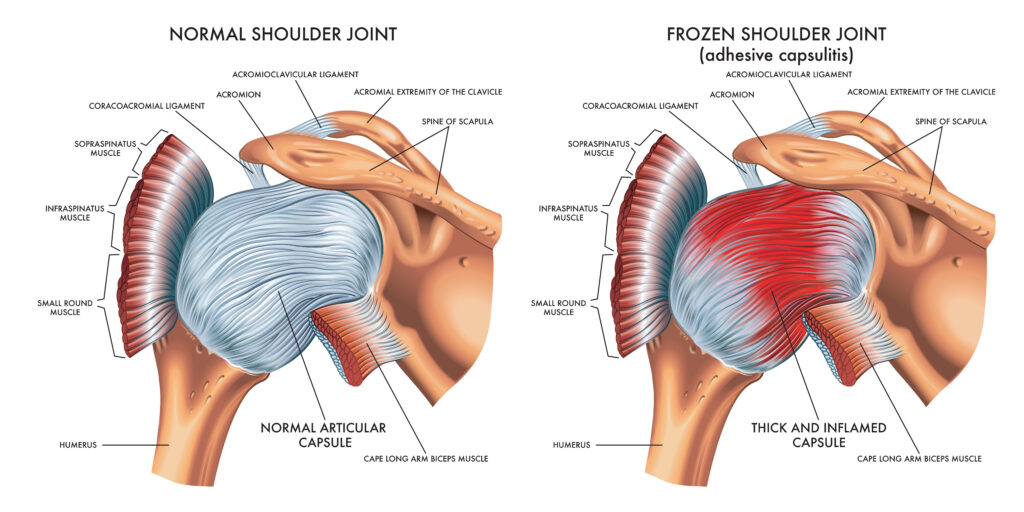
Adhesive capsulitis, commonly known as frozen shoulder, is a condition characterized by inflammation of the shoulder joint lining, causing pain and stiffness. Frozen shoulder typically progresses through three stages:
- Freezing Stage: Increasing pain and reduced range of motion (up to 9 months).
- Frozen Stage: Severe stiffness with limited mobility (up to 6 months).
- Thawing Stage: Gradual return of mobility and function.
What Are the Symptoms of Frozen Shoulder?
The symptoms of frozen shoulder include:
- Gradual onset of pain in the shoulder joint.
- Stiffness and limited range of motion.
- Pain that worsens at night or with certain movements.
- Difficulty with daily activities like reaching overhead or behind the back.
Risk Factors of Frozen Shoulder
Age
Common in individuals aged 40–60.
Female Gender
Women are more likely to develop frozen shoulder.
Diabetes
Significantly increases the risk.
Medical conditions
Including thyroid issues, cardiovascular disease, and Parkinson’s disease.
What is Adhesive Capsulitis Embolization (ACE)?
Adhesive Capsulitis Embolization (ACE) is a minimally invasive procedure designed to reduce inflammation and relieve pain in the shoulder.
How is ACE Performed?
1
Artery Access: The wrist artery is accessed using ultrasound guidance, and a small tube is inserted.
2
Angiogram Imaging: X-ray dye is injected to map the shoulder’s blood vessels.
3
Targeted Embolization: Microscopic particles are used to block inflamed blood vessels, reducing pain and inflammation.
4
Closure: The instruments are removed, and a pressure dressing is applied to the wrist.
Why Choose ACE?
Minimally Invasive
No incisions or stitches required.
Faster-results
Works more quickly than other treatments.
Effective pain relief
Most patients experience lasting relief.
Outpatient procedure
Return home the same day.
Conservative Treatments for frozen shoulder
Before considering ACE, patients may explore non-invasive treatments such as:
Physical Therapy
Improves flexibility, strength, and range of motion.
Medications
NSAIDs can reduce pain and inflammation but should not be used long-term.
Steroid Injections
Provide temporary relief but may lead to arthritis or reduced efficacy over time.
Hydrodilatation
Injection of sterile fluid into the joint to stretch the capsule and improve mobility.
Frequently Asked Questions about ACE
Is Adhesive Capsulitis Embolization painful?
The procedure is performed under IV sedation, with only mild discomfort during the injection of dye or medicine.
How long does ACE take?
The procedure typically takes 1–2 hours, depending on the complexity of the case.
What is the recovery time?
Most patients return to light activities within a week and experience full pain relief over several weeks.
Are there risks involved?
Risks are minimal and include minor bleeding, infection, or a temporary rash that resolves within two weeks.
Can ACE be repeated if the pain returns?
Yes, ACE can be repeated, or alternative treatments can be explored if symptoms recur.
How long does pain relief last?
Pain relief can last for over two years, especially when combined with strengthening and range-of-motion exercises.
Take the First Step Toward Pain Relief
At Vascular & Interventional Specialists of Kansas City, we are committed to providing innovative, minimally invasive treatments to help you live pain-free.
Contact us today or call (816) 720-5332 to schedule your consultation. Let us help you take the next step toward recovery.
If you experience emergency symptoms, such as severe pain or difficulty moving, call 911 immediately.