
Knee Osteoarthritis Treatment Kansas CityMinimally Invasive Genicular Artery Embolization (GAE)
What is Knee Osteoarthritis?
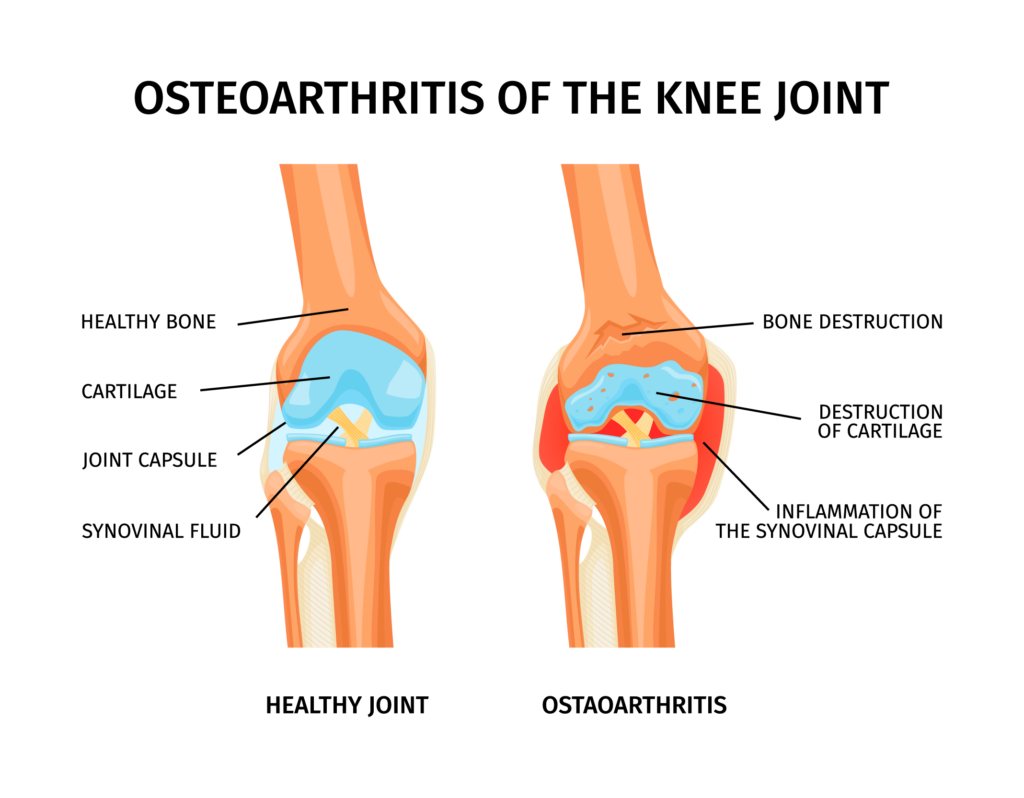
Knee osteoarthritis is a degenerative joint disease that occurs when the cartilage in the knee joint wears down over time. Cartilage is a strong, flexible tissue that cushions the knee and enables smooth joint movement. As it deteriorates, the bones in the joint rub against each other, causing pain, swelling, stiffness, and difficulty moving. If left untreated, knee osteoarthritis can significantly impact mobility and quality of life.
What Are the Symptoms of Knee Osteoarthritis?
The symptoms of knee osteoarthritis can vary, but commonly include:
- Pain and stiffness in the knee joint, especially after activity or prolonged rest.
- Swelling and inflammation in the knee.
Limited range of motion or difficulty moving the knee. - Popping or cracking sounds when moving the joint.
- Weakness or instability in the knee.
- Bone spurs or visible bumps around the knee joint.
If you experience these symptoms, consult a specialist to prevent further complications.
Risk Factors of Knee Osteoarthritis
Age
Cartilage naturally becomes less flexible and more prone to damage with age.
Obesity
Extra weight puts additional strain on the knee joint.
Previous Joint Injuries
Past injuries or surgeries can increase the risk of osteoarthritis.
Genetics
A family history of knee osteoarthritis may predispose you to the condition.
What is Genicular Artery Embolization (GAE)?
Genicular Artery Embolization (GAE) is a minimally invasive procedure that reduces pain and inflammation caused by knee osteoarthritis. This cutting-edge treatment works by blocking abnormal blood flow to inflamed areas of the knee, providing long-lasting relief without surgery.
How is GAE Performed?
1
Artery Access: An artery in the upper thigh is accessed using ultrasound guidance, and a small tube is inserted.
2
Angiogram Imaging: X-ray dye is injected to map the knee’s blood vessels.
3
Targeted Embolization: Microscopic particles are used to block inflamed blood vessels, reducing pain and inflammation.
4
Closure: The instruments are removed, and a pressure dressing is applied.
Why Choose GAE?
Minimally Invasive
No major incisions, general anesthesia, or lengthy recovery.
Long-lasting pain relief
Many patients experience years of symptom relief after one treatment.
Faster Recovery
Most patients return to normal activities within a few days.
Outpatient procedure
Completed in a single visit, with no hospital stay required.
Preventative Measuresfor Knee Osteoarthritis
While it’s not always possible to prevent knee osteoarthritis, these lifestyle changes can help reduce your risk:
Maintain a healthy weight
Reduce strain on the knees.
Exercise regularly
Strengthen muscles and improve joint stability.
Avoid excessive strain
Limit activities that stress the knees, such as heavy lifting or repetitive kneeling.
Practice joint-friendly movements
Use proper techniques during physical activity to avoid injury.
Frequently Asked Questions About Genicular Artery Embolization
What are the benefits of GAE for osteoarthritis?
GAE provides targeted pain relief by reducing inflammation in the knee, delaying or preventing the need for knee replacement surgery.
Is the procedure painful?
GAE is performed under local anesthesia with mild sedation, ensuring minimal discomfort.
How long does the procedure take?
The procedure typically lasts 1–2 hours, depending on the severity of the arthritis.
How soon can I return to normal activities?
Most patients resume light activities within a few days and fully recover within a week.
Can GAE stop osteoarthritis from progressing?
While it does not cure osteoarthritis, GAE slows disease progression and significantly improves quality of life.
Is GAE covered by insurance?
Many insurance plans cover GAE if it is medically necessary. Check with your provider for details.
Take the First Step Toward Pain Relief
At Vascular & Interventional Specialists, we offer advanced, minimally invasive treatments like Genicular Artery Embolization to help you manage knee osteoarthritis and regain mobility.
Contact us today or call (816) 720-5332 to schedule your consultation. Let us help you take control of your knee health and start living pain-free.
If you experience emergency symptoms, such as sudden, severe knee pain or loss of mobility, call 911 immediately.